Meet the companies in our 2026 Venture Fellows cohort.
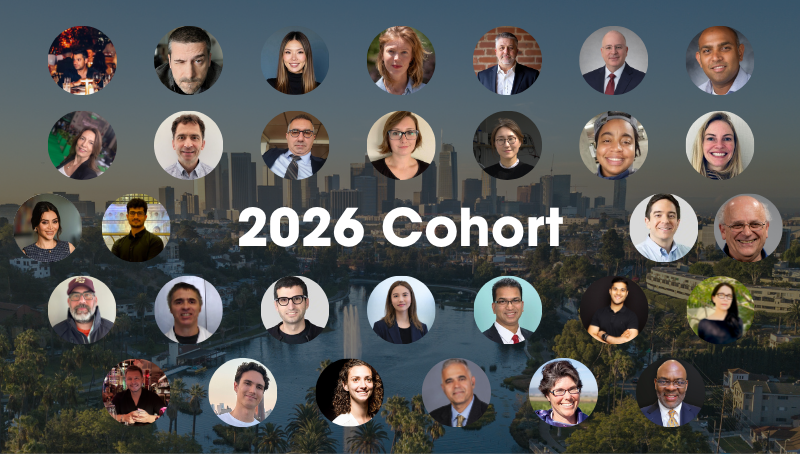
This year’s cohort brings together 17 ventures developing science- and technology-driven innovations at the intersection of urban resilience and resource innovation. From weather-resilient infrastructure and renewable energy systems to clean air, water stewardship, sustainable food systems, and pollution reduction, these companies share a commitment to strengthening community readiness and advancing resilience in Los Angeles and other climate-exposed regions.
Selected for their potential to scale beyond a single community, the 2026 cohort reflects a growing need for solutions that move from research and pilots toward real-world deployment where they are needed most.
2026 Cohort.
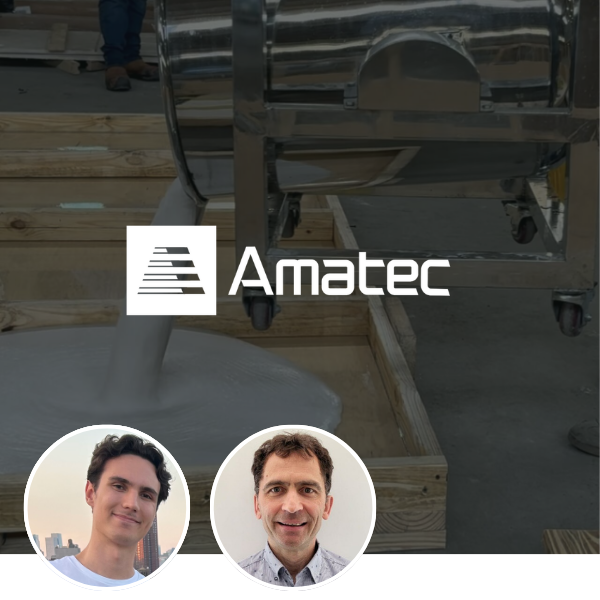
Amatec developed a material called CeleStruct that lets exterior walls be prefabricated quickly while staying cost-competitive and meeting fire and extreme weather requirements.
Athena Intelligence provides the wildfire risk intelligence that insurers, reinsurers, and utilities have been missing — probabilistic, behavior-driven, and built from empirical fire behavior rather than structural assumptions. The geospatial AI platform gives carriers, grid operators, and infrastructure managers the frequency and severity profiles they need to price exposure, harden assets, and make defensible capital decisions in wildfire-prone landscapes. Athena Intelligence was founded on the belief that measurable risk is manageable risk — and that wildfire has not been measured correctly.
BASEstud.io is transforming the most common infrastructure on Earth — the streetlight — into the backbone of a decentralized, climate-resilient energy network that keeps power, lights, and WiFi on during outages. Smart poles serve municipalities, developers, and communities by generating revenue from solar energy sales, WiFi connectivity, and EV charging, turning streetlights from a cost center into a revenue-producing community asset. BASEstud.io is on a mission to make every streetlight an active layer of resilience and economic opportunity, city by city.
Carbix develops mineral carbonation reactors that transform CO2 emissions into building materials for the global construction industry. Reactor-generated, ASTM-certified products are used in cement and concrete, reducing both product and plant (facility) embodied emissions.
CarBonne is building an in-vehicle direct air capture system that removes CO₂ from ambient air as vehicles drive, using passive airflow to reduce energy use. The technology targets depot-based fleet operators (e.g. transit, school bus, and delivery fleets), enabling them to turn existing vehicles into verifiable carbon removal assets. CarBonne’s mission is to make carbon removal scalable, affordable, and embedded directly into everyday transportation.
ReMyco is a biotechnology company developing biomimetic, fungi-based systems to remediate contaminated soil, water, and waste. The company serves contaminated site owners seeking scalable, in situ alternatives to costly, carbon-intensive cleanup methods. ReMyco’s mission is to transform the remediation industry and restore a polluted planet using nature-based solutions that unlock contaminated land, regenerate ecosystems, and build climate resilience at scale.
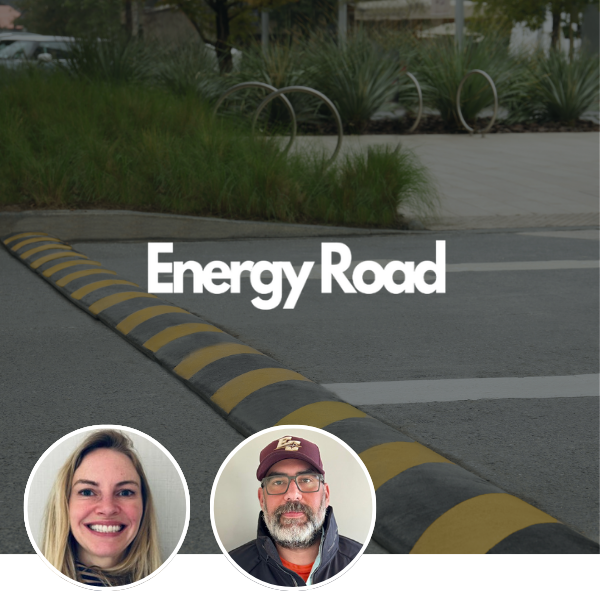
Energy Road redefines how communities are powered by converting traffic flow into consistent, renewable electricity through Volty, a roadway electric generator powered by vehicle traffic. Energy Road serves local governments and organizations seeking to diversify renewable energy portfolios and reduce electricity costs by installing Volty in high-traffic areas, where it also functions as a speed-control safety device.
Ensense AI builds a street-level data platform using mobile multimodal sensors and physical AI to capture real-world environmental, infrastructure, and mobility data at scale. The company serves public sector and enterprise customers with actionable intelligence for climate, real estate, and transportation applications. Ensense AI’s mission is to bring transparency to public spaces through scalable sensing and software innovations.
Monza Tech builds insurance-grade climate and infrastructure intelligence products, starting with Sentinel Grid, a multi-hazard outage risk platform. Sentinel Grid helps insurers, reinsurers, and risk teams forecast where power outages are likely, identify the driving hazard, estimate potential severity, and understand portfolio exposure. Monza Tech’s mission is to turn fragmented public weather, outage, infrastructure, and hazard data into auditable, actionable risk signals for underwriting, claims preparation, portfolio monitoring, and parametric insurance.

Nutraberry converts agricultural byproducts into ultra-fine, formulation-ready functional ingredients, with upcycled fiber as the first commercial SKU family. The low-damage micronization process improves dispersion, texture, and usability in food, beverage, and fermentation systems. Nutraberry serves food, nutrition, and ingredient companies seeking clean-label, higher-fiber, microbiome-aligned ingredients from underutilized supply chains.
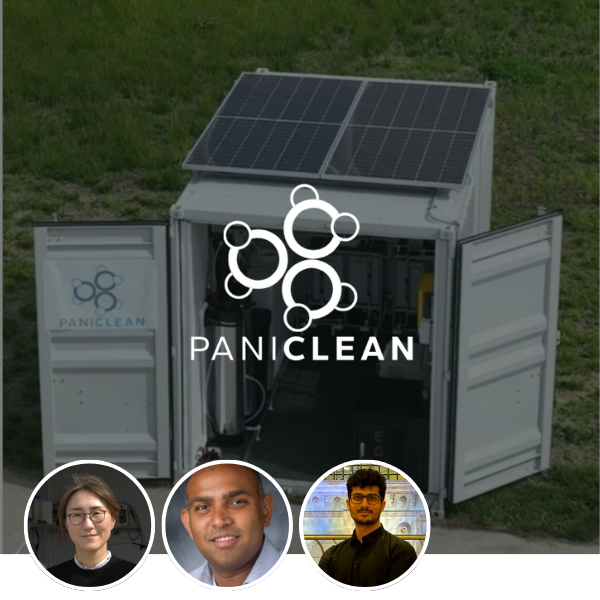
Pani Clean develops sustainable electrochemical technology that converts nitrate-polluted water into valuable ammonia. The innovation serves industries and communities facing nitrate wastewater challenges by transforming an environmental liability into green ammonia for fertilizer and clean fuel applications. Pani Clean’s mission is to reduce water pollution, lower treatment burdens, and create value from waste through a circular economy.
Pikare SkySource develops modular Atmospheric Water and Energy Harvesting (AWEH) systems that produce PFAS-free drinking water and clean power off-grid, deployable in under 45 days without pipes or grid connections. The company serves climate-vulnerable communities, critical infrastructure operators, and smart cities seeking decentralized, rapidly scalable resilience. Pikare SkySource’s mission is to replace fragile centralized utilities with water-positive, carbon-negative platforms that ensure communities and industries can thrive despite climate disruptions.
Roll-A-Rack is a solar infrastructure company developing a faster, more flexible racking system for land-based solar deployment that reduces land requirements by 50%. The technology is designed to reduce installation complexity and improve project viability on constrained or non-ideal sites such as landfills, brownfields, small farms, irregular parcels, and community-sensitive locations. The company is currently focused on pilot validation and identifying the strongest commercial path, including direct deployment, strategic partnerships, licensing, or wholesale technology transfer.
Sobek offers research-based detention basin retrofits designed to reduce erosion and improve water quality in both new and legacy stormwater management systems. By slowing and treating outflow from detention and retention ponds, the technology helps prevent downstream stream destabilization and contaminant discharge. Sobek’s mission is to shift stormwater management from a reactive repair model to a proactive, prevention-focused approach that protects ecosystems, strengthens infrastructure resilience, and reduces long-term public costs through scalable, upstream solutions.
Based in California, USA, Sujen International LLC is an advanced energy technology company developing modular micro wind systems designed to capture energy from previously untapped airflow environments. The proprietary WindWall / MicroCube platform enables scalable, distributed energy generation across urban, industrial, and mobility applications where traditional wind and solar solutions are constrained.
Past Cohorts.
Take a look back at the companies who have participated in our program.
The Venture Fellows program is a eight-month, immersive experience that supports innovators to pilot and scale solutions that enhance community resilience and adaptability to weather disasters and related environmental conditions at no-cost.
Follow us on Instagram to get updates on all our activities on our Fellows.